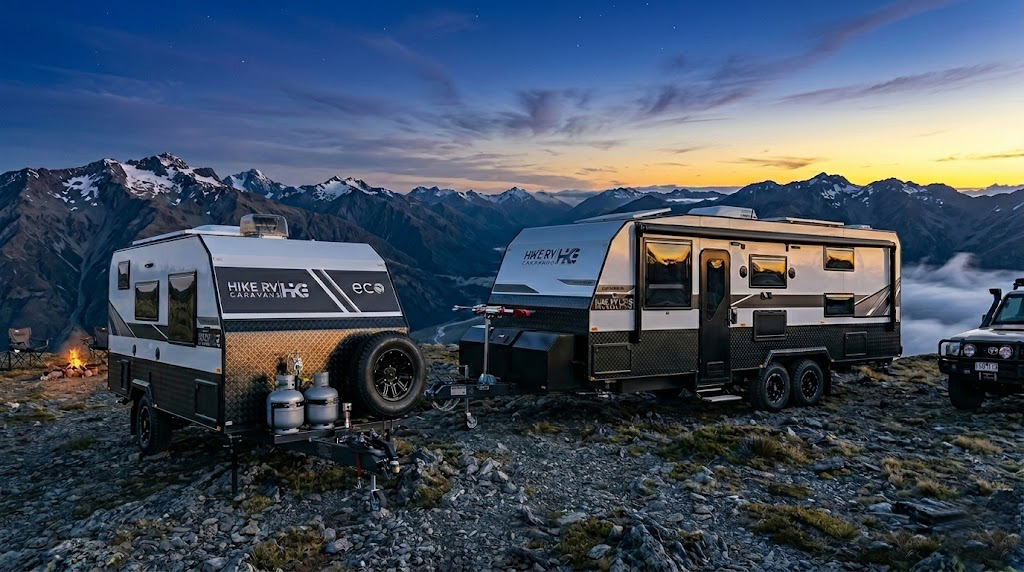


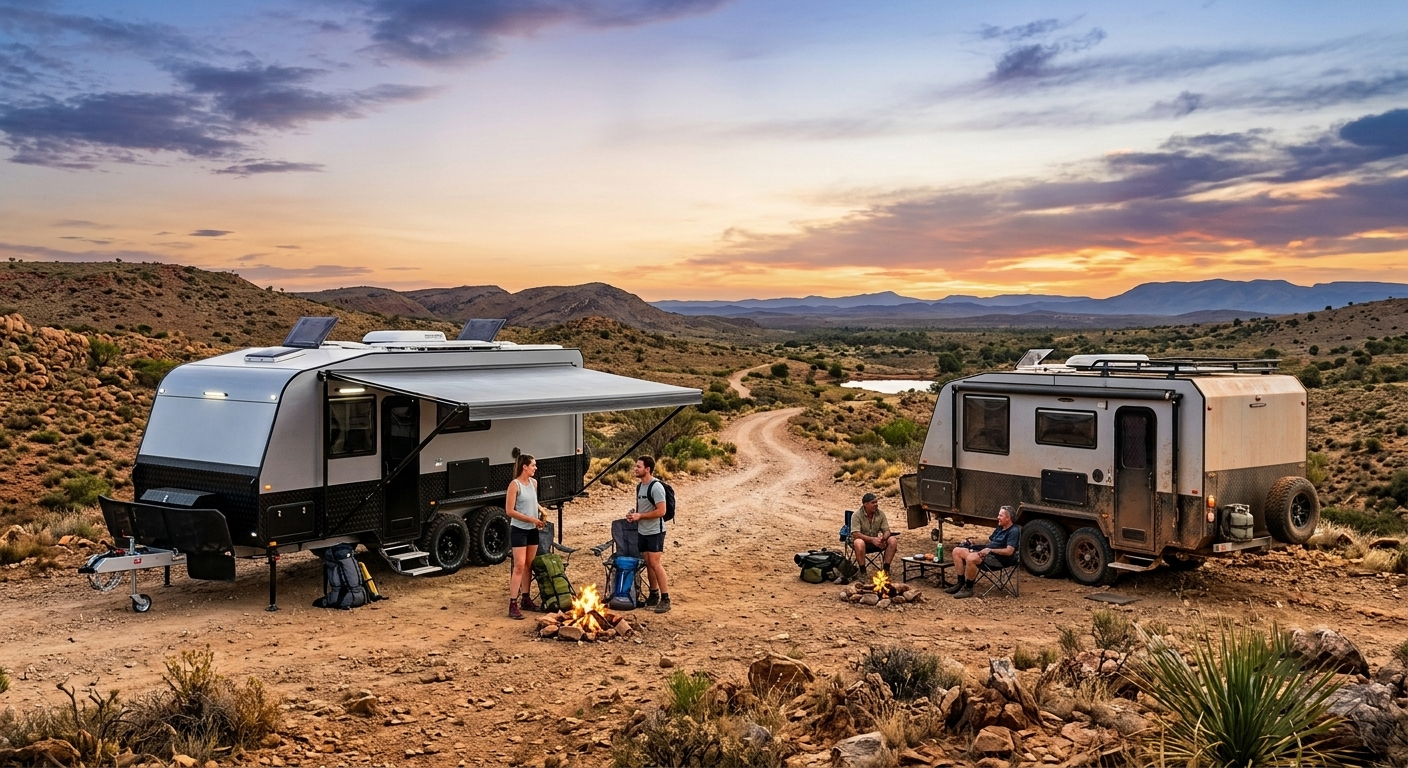
The case for buying new
You know exactly what you're getting. No hidden history, no guessing whether a previous owner towed it hard on corrugations without maintaining the suspension, no wondering if a leak was ever properly repaired or just painted over.
Warranty coverage from day one. A new caravan comes with manufacturer warranty on the chassis, appliances and build — meaning major faults in the first few years are the manufacturer's problem, not yours.
Current technology and compliance. Lithium battery systems, solar setups, water filtration and appliance efficiency have all moved quickly in recent years. A new van typically reflects current standards rather than what was current five or ten years ago.
Full customisation. Buying new — or ordering to spec — means choosing the layout, tow weight, and off-grid capability that actually suits your travel plans, rather than compromising on someone else's choices.
The case for buying used
Lower upfront cost, and someone else absorbed the early depreciation. Caravans, like most vehicles, lose a meaningful chunk of value in the first few years. Buying a well-maintained van a few years old can mean significant savings for a caravan that's barely been used.
You can see how it's actually performed. A used caravan with a genuine maintenance history and honest ownership story tells you something a brand-new van can't — how it's held up under real conditions.
Faster availability. Custom or high-demand new caravan builds can involve a wait. A used van that suits your needs can often be inspected, purchased and towed home within days.
Where the real risk sits with used caravans
The risk with a used off-road caravan isn't really about age — it's about unknown history, and off-road caravans carry more of this risk than on-road-only vans because they've likely seen harder conditions.
Undisclosed water damage. This is the single biggest risk. A leak repaired properly is fine; one painted over or hidden behind new carpet is a serious problem that surfaces later. Always check ceiling linings, cupboards near external walls, and flooring near windows for soft spots or staining.
Chassis and suspension wear from off-road use. Corrugations and rough tracks are harder on a chassis than sealed roads. Ask specifically about the kind of terrain the van has actually seen, not just how many kilometres it's covered.
Outdated electrical or gas systems. Older AGM battery setups, aging wiring, or gas fittings that haven't been serviced can all mean unexpected costs soon after purchase.
No remaining warranty, unless the caravan is still within its original manufacturer warranty period and that warranty is transferable to a new owner — this varies by manufacturer, so it's worth checking rather than assuming.
A practical way to decide
Ask yourself three questions:
How much of your budget is genuinely flexible? If a warranty claim or unexpected repair in year one would derail your plans, the certainty of new is worth more than it might first appear.
How remote does your travel actually get? The more remote and off-grid your trips, the more a known, well-documented maintenance history — or the certainty of a new build — matters. Reliability isn't optional five hundred kilometres from the nearest town.
Do you want to customise, or are you happy to compromise on someone else's floorplan choices? If your travel style is specific (full-time living, toy hauling, a particular bed configuration), buying new or ordering to spec often ends up cheaper than retrofitting a used van to suit.
If you do go used: the non-negotiable checks
Get a professional pre-purchase inspection, specifically checking for water ingress and chassis condition
Ask for full service and maintenance records, not just a verbal history
Check registration, compliance plate details and any modifications against what's actually fitted
Have the gas system checked and certified if it hasn't been serviced recently
Where Hike RV fits either way
If you land on new, our team can talk through current build specs, lead times and customisation options across the range. If you're still deciding, it's worth reading our beginner's guide to choosing the right RV caravan alongside this one — the layout and capability questions matter whether you buy new or used.
Contact an advisor to talk through your budget and travel plans, no pressure either way.